 Milesheet
Underinflated tyres cost you twice
A few psi low is invisible, legal, and quietly expensive. It costs fuel every mile and it costs the tyre itself, and for a high-mileage work vehicle both add up fast.

Of the things that quietly raise the cost of a work vehicle, tyre pressure is the cheapest to fix and the least often checked.
Two costs, not one
Rolling resistance. A soft tyre deforms more as it rolls, and that deformation is energy you paid for at the pump. The effect is small per mile and relentless: it applies to every mile, on every journey, until somebody notices.
Tyre life. An underinflated tyre carries its load on the shoulders rather than across the tread, so the shoulders wear out while the centre still looks fine. The tyre reaches the legal limit early and unevenly, and you buy a new one sooner than you should have.
For a car doing ordinary mileage, both are annoyances. For a van doing 25,000 miles a year, they compound into real money, and the tyre bill is the more visible half.
Why it goes unnoticed
Three reasons, and they reinforce each other.
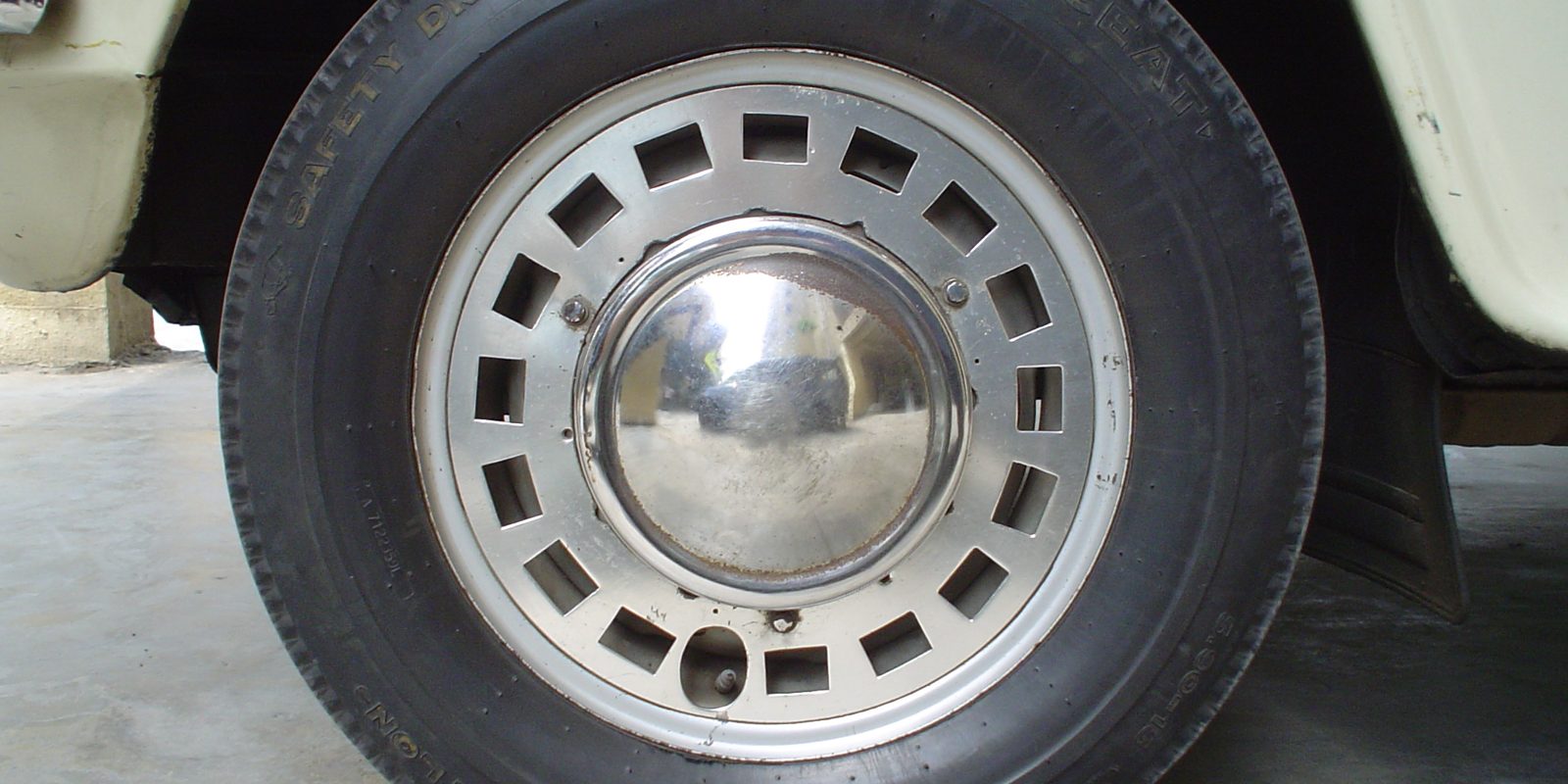
Modern tyres do not look flat. A tyre several psi below its correct pressure looks entirely normal. The visual check that worked on a 1970s crossply tells you nothing on a modern low profile.
Pressures fall on their own. Tyres lose pressure gradually through the rubber, faster in cold weather, so a tyre set correctly in September is genuinely low by December without anything having gone wrong.
The warning light is a floor, not a target. A tyre pressure monitoring system is calibrated to warn about a dangerous loss, not a suboptimal one. A vehicle can sit several psi down across all four corners, cost you fuel and tyre life on every journey, and never illuminate anything.
The correct pressure is not one number
Two things people get wrong.
It is not the number on the tyre. The figure moulded into the sidewall is a maximum, not a recommendation. The correct pressure is the vehicle manufacturer's, and it lives on a plate in the door shut, in the fuel filler, or in the handbook.
It depends on the load. Almost every vehicle has a higher recommended pressure for a full load, and vans have a substantially higher one. A van running at unladen pressures with a ton in the back is underinflated in the way that matters most, under exactly the conditions that punish it hardest.
That is the trades problem in a sentence: the vehicle is loaded, the pressures are not adjusted, and both the fuel and the tyres pay.
Checking it properly
- Check cold, before driving. A warm tyre reads high and hides the problem
- Use your own gauge. Forecourt airlines are notoriously inaccurate
- Use the loaded figure when the vehicle is loaded
- Do not forget the spare, if there is one
Once a month is enough for most vehicles, and takes five minutes.
The reason to measure your own economy
The reason this is hard to take seriously is that the effect is invisible. Nobody notices a small percentage on a tank of fuel, because they do not know what the tank should have delivered.
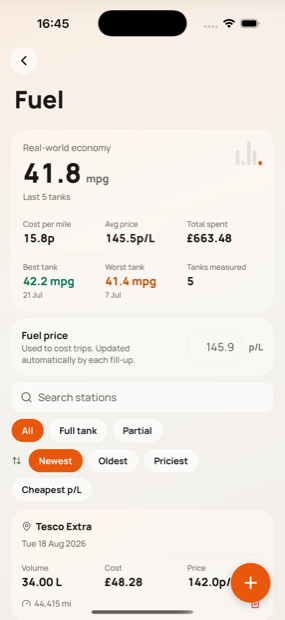
That changes the moment your fuel economy is a measurement rather than a brochure figure. If you know what your vehicle actually returns between full tanks, a drift downwards is visible, and it is usually one of a short list of causes: pressures, a heavy right foot, a roof rack left on since summer, or winter.
Milesheet works your real economy out from your own fill-ups for exactly this reason. The brochure figure never told anyone anything. Your own trend line tells you when something has changed.
Sources
- Annex 6: vehicle maintenance, safety and security (The Highway Code)
- Getting an MOT (GOV.UK)
- Weekly road fuel prices (Department for Energy Security and Net Zero)
General information, not advice on your specific vehicle. Use the pressures the manufacturer specifies for your vehicle and load.