 Milesheet
Working out what your passengers actually owe you
Petrol money without the guesswork: what a journey really cost, how to divide it fairly, and why the driver's share is the argument.

Somebody drives, everyone says they will chip in, and then nobody knows what the number is. It gets settled with a round guess that is either generous or resentful, and often both across the same weekend.
The number is knowable. Here is how to get it.
Start with what the journey actually cost
The honest figure is fuel used, not fuel bought. You want:
litres used = miles ÷ (mpg ÷ 4.546)
then multiply by what you paid per litre.
A 300-mile round trip in a car doing a real 42 mpg uses about 32.5 litres. At 145p a litre, that is roughly £47.
Note real mpg. The brochure figure will understate what the trip cost, usually by 10–20%, and you are the one absorbing the difference. Two full tanks with odometer readings tell you your own number, which is the only one worth using here.
Then decide who is paying
This is where it turns social rather than arithmetic, and there are two defensible answers.
Everyone shares, driver included. Four people, £47 of fuel, £11.75 each. The logic: everyone is going to the same place and benefits equally, and the driver is already contributing the car, the wear and the driving.
Passengers cover the fuel. Three passengers split £47, £15.67 each, driver pays nothing. The logic: the driver is providing the vehicle and doing the work, so the least the others can do is cover the consumable.
Neither is wrong. The mistake is not agreeing which one you are doing until somebody is being asked for money.
What about wear and tear, not just fuel?
Fuel is roughly a third to a half of the true cost of running a car once you count tyres, servicing, depreciation and insurance. That is the reasoning behind HMRC's 45p a mile, which is meant to cover the lot.
For a trip with mates, charging full whack-per-mile usually feels like running a taxi service. Fuel is the convention because it is the cost that visibly happened. Worth knowing the difference, though, before you conclude you broke even.
Keep it out of the group chat
The thing that makes this awkward is not the money, it is the ambiguity. A figure someone worked out, showing distance and fuel price, ends the conversation. A guess invites negotiation.
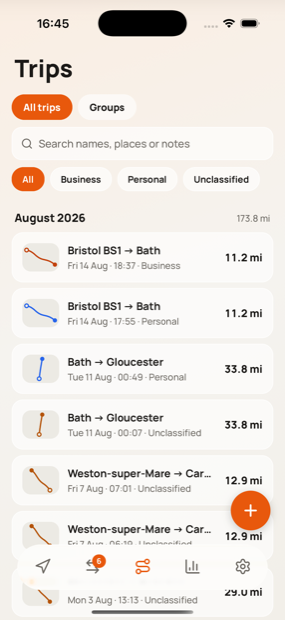
Milesheet costs the journey from your own measured economy, splits it between however many were in the car — with or without the driver taking a share — and shares the drive as a PDF with the route and the numbers on it. Send that instead of a text saying "about twenty quid?".