 Milesheet
Winter driving when it is not optional
Everyone else can stay at home. If the job is at the other end, here is what actually helps.

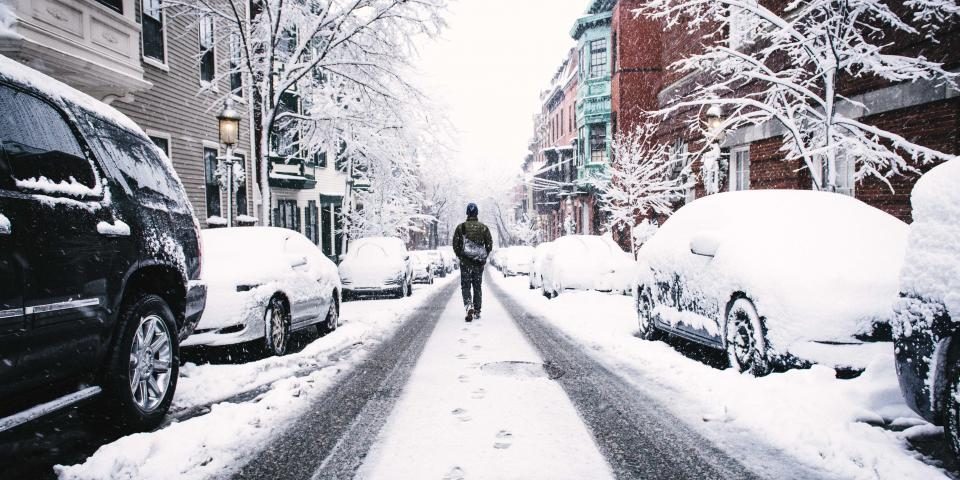
Advice to avoid travelling in bad weather is sound and useless to someone with a customer waiting. The realistic question is how to do it as safely as possible.
Stopping distances are the whole problem
The Highway Code puts stopping distances at ten times the normal figure on ice, and roughly double in the wet. Those are not cautious estimates.
The practical translation: the gap that feels absurd is the correct one. Whatever following distance you keep in summer, multiply it, and accept that people will fill the space. Letting them is cheaper than the alternative.
Stopping distances, by condition
From 60 mph, indicative:
| Condition | Relative stopping distance |
|---|---|
| Dry | Baseline |
| Wet | About double |
| Snow | Considerably more |
| Ice | Up to ten times |
Which is why the gap that feels absurd in winter is the correct one.
Tyres matter more than anything else you can buy
Below about 7°C, standard summer tyres harden and lose grip whether or not there is ice. Winter or all-season tyres are a bigger safety improvement than any driver aid, and for anyone doing serious winter mileage they are worth the cost.
If you are staying on summer tyres, tread depth becomes critical. The legal minimum of 1.6mm performs badly in standing water, and aquaplaning is a winter risk as much as an ice one.
Before you set off
- Clear the whole car, not a letterbox in the windscreen. Driving with obscured vision is an offence, and snow left on the roof arrives on your windscreen at the first hard stop
- Lights and plates clean, because salt spray covers both within miles
- Screenwash to the right concentration — a frozen washer bottle on a salted motorway is genuinely dangerous
- Fuel or charge higher than you would normally accept. A closure that adds two hours is common in winter and unremarkable
In the car
Something to keep you warm if you stop, a torch, a phone charger, and enough water to matter. Not because you expect to be stranded, but because being stranded is unremarkable in a British winter and the cost of carrying them is nil.
The one that gets people
Black ice on a clear, still morning after a cold night — particularly on bridges, in shaded cuttings and on untreated rural roads. The road looks wet. It is not.
Bridges freeze first because they lose heat from both sides. If you drive rural routes for work, that is worth carrying around as a rule rather than a fact.
And the economics
Winter costs you fuel too — cold engines, denser air, everything electrical on. A 10–20% dip in MPG between summer and January is normal and not a fault.
If you log fill-ups, you will see it as a shape each year, which is oddly reassuring: it means the dip is the season rather than the car.
Sources
- The Highway Code
- The Highway Code — General rules, techniques and advice for all drivers and riders (103 to 158)
- The Highway Code — Annex 6: vehicle maintenance, safety and security
- GOV.UK — Getting an MOT
General road safety information, not legal advice.