 Milesheet
Spain reimburses 19 cents a kilometre, tax free
One flat figure, no bands and no threshold. The structure is the cleanest in Europe. The number is the problem.


Update, July 2023: Spain raised the exempt figure from 19 cents to 26 cents a kilometre, by Orden HFP/792/2023. This post describes the position as it stood when it was written.
Update, April 2026: the UK approved rate for cars and vans rose from 45p to 55p a mile for the first 10,000 business miles. The 25p rate above that, and the 5p passenger payment, are unchanged. This post describes the position as it stood when it was written.
Spain has a single figure, which makes it easier to describe than France. The problem is not the structure. It is the number.
Nineteen cents, tax free
Spanish employers can reimburse business driving in an employee's own car at 19 cents a kilometre free of income tax. Above that, the excess is treated as pay and taxed accordingly. Tolls and parking can be reimbursed on top, against receipts.
The mechanism is clean and the arithmetic is simple. One rate, no bands, no threshold, no annual reset to track.
The figure had stood unchanged for a long time before this was written, through a period in which fuel and everything else about running a car rose sharply.
What that means in practice
Nineteen cents a kilometre works out at about 26p a mile once you convert both the currency and the distance. Britain's 45p, itself criticised for having stood still since 2011, is close to double it.
For a Spanish employee, the consequence is not that a claim is disallowed. It is that the exempt ceiling stops covering the cost. An employer who wants to make a driver whole has to pay above 19 cents, and everything above 19 cents is taxed as salary. So the driver is taxed on money that is not income, it is reimbursement of a cost they actually incurred.
That is the practical grievance behind the campaign to raise it, and it is a good illustration of why an unmoved rate is not a neutral thing. A rate that stands still while costs rise is a cut, applied quietly.
The structure is still worth understanding
Two features of the Spanish system are worth knowing even while the number is low.
Receipts matter more, not less. Because the per kilometre figure covers so little, the separately reimbursable items carry more weight. Tolls and parking on evidence are a meaningful part of a Spanish claim in a way they are not somewhere with a generous inclusive rate.
The exemption is the employer's to apply. This is a payroll mechanism. It governs what your employer can pay you without deducting tax, rather than a deduction you claim on a return. If your employer pays nothing, there is no Spanish equivalent of Britain's Mileage Allowance Relief to fall back on.
That last point matters and is often missed by British drivers working in Spain, who expect to be able to claim the shortfall themselves.
Side by side
| Spain | UK | |
|---|---|---|
| Exempt rate | 19 cents per km | 45p per mile, then 25p |
| Roughly, per mile | About 26p | 45p |
| Bands | None | One step at 10,000 miles |
| Last changed | Long unchanged | 2011 |
| Tolls and parking | Separately, on receipts | Separately, on receipts |
| Employee claims a shortfall | No equivalent mechanism | Yes, Mileage Allowance Relief |
Recording it
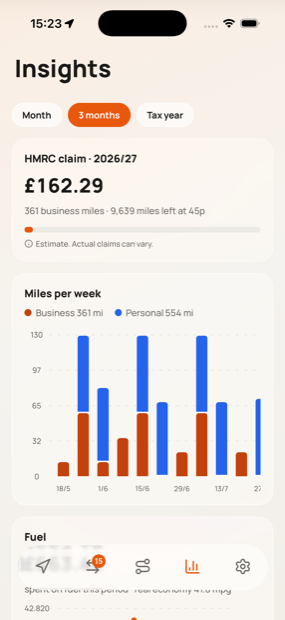
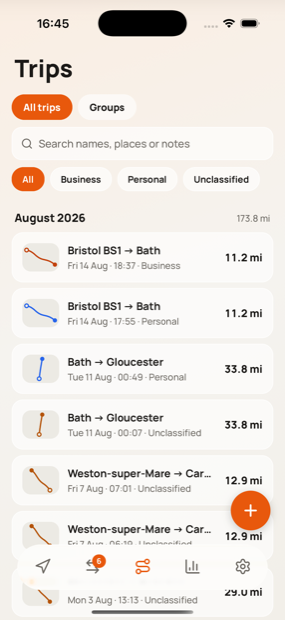
Spain has no built in scheme in Milesheet, because a single figure that everyone agrees is out of date is a poor default to print next to somebody's total. The app records the distance and takes the rate as a setting, so a Spanish driver can enter 19 cents, or whatever their employer actually pays, and see both.
Seeing both is the useful part. The gap between what a journey cost and what it was reimbursed at is the number worth having, and it is invisible unless something is keeping the log.
Sources
- Asignaciones para gastos de locomoción (Agencia Tributaria)
- Orden HFP/792/2023, which raised the figure to 26 cents (BOE)
- Travel, mileage and fuel rates and allowances (HMRC), for the British comparison
General information for drivers in Spain and the UK, not tax advice. Check the current exempt figure with the Agencia Tributaria or your asesor.